
RESEACH REPORT
Somalia has experienced prolonged conflict and fragile governance systems, particularly in regions such as Jubaland where inter-clan tensions and insecurity have affected political stability. In response, reconciliation initiatives and community peace dialogues have increasingly been used as important tools for rebuilding trust, resolving disputes, and strengthening local governance structures.
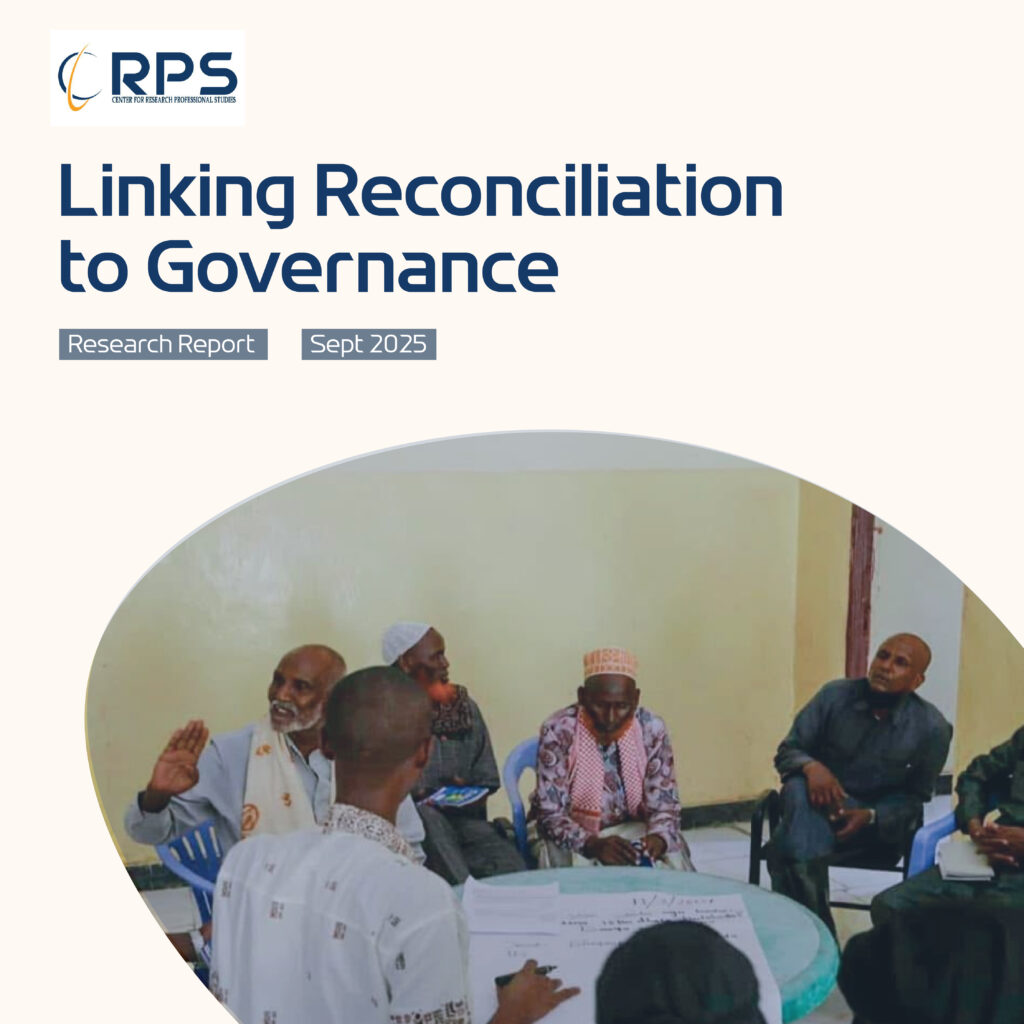
In recent years, locally driven reconciliation processes in districts such as Luuq, Dhoobley, and Kismayo have created platforms where elders, civil society organizations, women, and youth participate in addressing community conflicts and promoting cooperation. These dialogues have gradually influenced governance by encouraging more inclusive participation in local decision-making.
This study examines how reconciliation dialogues contribute to improving governance and expanding political inclusion in Jubaland. By analyzing selected district cases, the research aims to understand how community peace processes can be institutionalized into governance systems that support inclusive and sustainable peace.